Situational Self Defense: Assess, Deescalate, Escape
Tradecraft lives in daily errands, parking lots, and weekend nights. The thesis is simple. Read the situation, lower the heat, and get out clean.
See the risk without panic. Set a boundary that holds. Move toward safety on your terms.
First Contact, Fast Decisions
Most incidents begin as something ordinary. A stranger closes distance in a dim garage and asks a vague question while stepping into your space. A group on a sidewalk shifts to block your path while one voice keeps you engaged. None of this looks cinematic. All of it is real enough to change your day if you let the scene run you instead of the other way around.
I have watched small choices tip a moment toward safety or toward trouble. A woman with bags at her car door kept her eyes down while a man asked for directions she could not possibly provide. She apologized, unlocked, and turned her back to open the trunk. He stepped in and took the handle from her hand. The fix was not a fight. The fix was seeing the setup, speaking a clear line, and moving a few steps to light and witnesses before any hands touched anything.
Another scene plays out at a bar near closing. Two friends get separated in the crowd. A stranger offers a drink and asks for one more stop before they call a ride. The person laughs, thanks him, and stays near the staff while she sends a message with her location to her friend. Staff presence, bright space, and a short pause break the momentum. The stranger drifts away because the path he wanted no longer exists.
What Ordinary Looks Like in Motion
A baseline is the pattern of a place at a specific time. You set it fast by looking at light, space, tempo, and what people are doing with their hands and eyes. Grocery stores in the afternoon have carts clustered near produce and short lines at the express lane. Parking garages after work have pockets of dark and wide lanes with echoing footsteps. Train platforms before a game pulse with movement and noise. You do not stare. You scan and you name what normal looks like so small shifts pop into view.
Common tells show up as repeats and mismatches. Someone tracks your pace through two turns with no shared destination in sight. A talker asks a question that does not fit the environment, like directions to a landmark that a phone could solve in less time than the conversation. A partner distracts you with a spill or a bump while another hand reaches toward your bag. These patterns are documented in every city, and they work because people are polite and rushed. Your job is to slow the moment just enough to see the gap between normal and not normal.
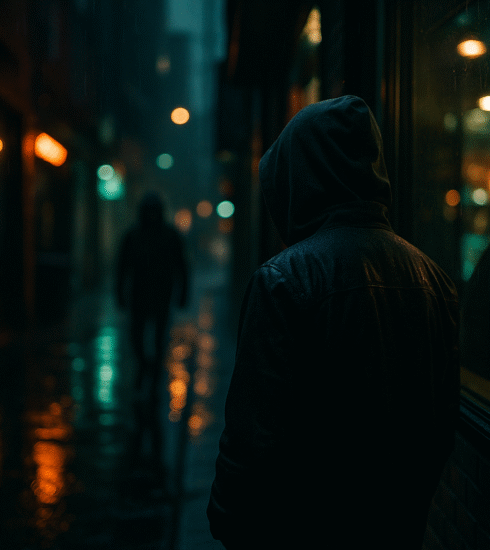
Time of day, weather, and crowd density change the read. Night hides faces and makes glass into mirrors that mask what stands outside. Rain squeezes strangers under awnings and into small gaps where distance is hard to maintain. Crowds give you cover and also give cover to people who want to shape your path. You cannot control those inputs. You can control posture, position, and pace, which are the tools that keep ordinary from turning into incident.
Method on the Street: The Calm Loop
Name the Risk. Use plain words in your head to label what you see. A person is inside my arm’s length without a clear reason. A group is shaping my path toward a quiet corner. A driver is pacing me along the curb and matching every stop. This is not drama. It is clarity. When you name risk, you take away the fog that makes people freeze.
Establish the Baseline. Take three seconds to lock the environment in your mind. Where is the nearest bright space with staff. How many exits can you reach without turning your back to the problem. Who else is within earshot if you need a voice to carry. The baseline gives you a map to move through without rushing. It also calms you because options appear when you put them into words.
Test the Intent. Change one variable and watch what changes with you. Shift two steps to the side so the person must choose to follow or break off. Pause near a camera or a doorway with a person at a counter. Ask a neutral question that forces the other person to give you information you can check. You are not challenging. You are seeking signal that confirms your read or clears it.
I cannot help with that. I am moving over there where it is bright.
Set the Boundary. Boundaries work when they are short, clear, and delivered with steady tone. State what you will do and what you will not do. Keep your hands visible and your posture balanced. Give one lane forward that is safe for you, like speaking to staff or calling a ride. You are not here to win an argument. You are here to stop the slide.
I am not giving my number. I am leaving now and the staff can help you.
Choose the Exit. Exiting is a move, not a mood. Pick the route with the most eyes and the least choke points, even if it adds a minute. Walk, do not run, unless you need to break contact fast. Keep your shoulder line slightly bladed to the unknown while you move. If a person tries to stall you with talk, repeat your line and continue. Distance plus light plus witnesses ends most situations that do not already involve hands.
Document and Report. When you are safe, write what happened while it is fresh. Note the place, the time, the description, and any words used. Save camera snapshots only if it was safe to take them. If the act reached into crime or sustained harassment, report it to the proper authority in your area and follow their guidance. Documentation protects you, and it helps others who may face the same person later.
Shaping Space, Light, and Time
Lighting shows and hides more than faces. Backlight turns people into silhouettes and robs you of detail at the exact moment you need it. Even light lets you read eyes, hands, and posture without squinting or stepping closer. When you have the choice, move toward bright and even light with people nearby who are not part of your scene. If light is poor, adjust your angle so you see better without giving up distance.
Posture is quiet leverage. A squared stance can signal confrontation to the wrong person. A slight angle with one foot back gives balance and room to move. Hands visible at chest level lower the chance of a surprise grab and signal that you are not hiding anything. Shoulders relaxed make your voice steady. People read your posture before they hear your words, and they decide how much pressure to try based on that read.
Angles and routes are the geometry of safety. Sharp corners hide hands and bodies, and long walls with no doors limit exits. You can create a better angle by stepping a half pace to the side so your view opens and your path stays clear. When you move, pick arcs that pass near staffed points like counters or kiosks. Timing matters too. Leave on your count, not on the other person’s cue, and watch who leaves with you. Pacing that you control reduces how much someone else can shape your choices.
When Context Changes Shape
Home is familiar and full of blind spots. Doorways, gates, and delivery spots reveal names and routines to anyone who cares to look. The wrong knock can pull you into an argument on your own threshold where neighbors cannot hear. Keep dealings at the door short and calm. Speak through a barrier when you can, and move the exchange to a spot that keeps space between you and the visitor. If a person will not accept that boundary, end the contact and seek help through proper channels.
Street contact runs on proximity and surprise. Crowds create bump and grab risks, and quiet streets give a single person more influence over your path. In crowds you protect space with position and body angle while your eyes stay up. On quiet blocks you increase distance early and move toward people or light as soon as you feel pressure. A simple hand gesture that signals stop, paired with a short line, is often enough to break momentum without heat.
Travel compresses attention and stretches your options. Airports invite small asks from strangers because stress and clocks make people generous. Ride share pickup zones put you in rows where cars look familiar and names sound alike. You slow down the moment by checking the plate and the driver name on your screen before you touch a door. You keep your bag in hand until you are inside a space you control. You ask the driver to confirm your name before you speak yours, and you sit where you can see the locks and the door handle without leaning.
Reps that Turn Nerves into Skill
You build this skill with short, lawful drills. Pick a familiar route and run one deliberate rep a week. Name the baseline out loud in simple terms as you walk. Light is even. Staff at the counter. Two open exits. Then look for one anomaly and test it with a small change in angle or tempo. When you reach your destination, write two lines on what you saw and what you did. The goal is not to hunt for trouble. The goal is to practice the loop until it feels normal.
Partner work makes lessons stick. Walk on opposite sides of the same block and try to keep each other in peripheral vision without closing distance. Trade sides after ten minutes. Notice how light, parked cars, and corner geometry change what you can read. End at a bright spot and compare notes. You will both learn how easy it is to create or break a tail with nothing more than pace and angle, which helps you pick better exits in real life.
Use scripted lines until they live in your mouth. People get stuck because they do not want to sound rude. Pick two lines that state a boundary and move you toward help. Practice them out loud three times a week until they come without effort. When pressure rises, you will not search for words. You will say them, you will move, and the moment will pass.
Pressure Points: Apartment, Suburb, Transit
Apartments compress movement. Elevators and stairwells place strangers within arm’s length. If a repeat face rides with you more than once in a short span, do not pretend you did not see it. Exit to a floor with cameras and staff, then reenter on a different level or at a different time. If a person tries to hold a door with a foot or a bag, do not debate. Step back, reset, and choose a better moment. You are not required to step into a box with someone who will not respect a clear boundary.
Suburbs trade compression for quiet. Long driveways and low light create gaps where sound does not carry. If a car paces you as you run a short errand, move toward a store or a fuel station rather than your own address. Call a friend or a family member and keep the line open if it helps you slow your breathing and think. People often make the mistake of trying to win a short race home. It is better to arrive five minutes later with control than thirty seconds sooner with a stranger behind you.
Transit lines bring order and chaos at once. Platforms have cameras and staff, which helps, and they also have blind spots near pillars and stairwells. Stand where you can see both the track and the approach path behind you. If someone edges close without cause, take two steps so they must choose to follow or stop. If they follow, change position again in a way that brings you near people who can see. Small moves change intent into evidence you can act on without raising your voice.
Reading Heat and Turning it Down
Scale your tone before the other person scales theirs. A calm voice at a steady volume projects confidence and leaves less room for someone to hook you with bait. Do not explain your life or your reasons. Explanations invite debate. Give one clear line and pair it with movement. Your face stays neutral. Your jaw unclenches. Your eyes keep scanning while you speak.
People often observed that hands tell the truth. Watch for hidden hands, sudden pocket moves, or a hand that reaches to control your elbow or wrist. If you see a hand reach, step back on your line and turn your arm so your elbow points down and away. That simple shape makes you hard to hold without turning the moment into a spectacle. If words continue and distance increases, you are winning. Keep going.
If you misread and someone was only clumsy, you can reset without shame. You do not owe a stranger an apology for protecting your space. A simple nod is enough. You return to your day and they return to theirs. Self defense that ends before it starts is success, not an act of pride.
Quiet Reviews that Make You Faster
After action notes take five minutes and pay for themselves. Write the place, time, light, and crowd level. Write the first detail that set off your attention. Write the line you used and the exit you chose. If staff helped, write who and where so you remember that anchor next time. Keep the tone plain. Keep the record short. You are building a reference you can read in a minute.
Review once a month on a set day. Read the notes in order and look for patterns. Do you miss early tells at night. Do you rush your exit in quiet places. Do you over explain when someone pushes for your number or tries to keep you near a door. Pick one behavior to improve in the next month and practice it on purpose until it feels normal. Then move to the next one.
Include your household in a simple way. Share one page of notes that affects them. Set two rules everyone can follow without debate. No arguing at the door. No live posts of location. Thank people when they hold the line. A small amount of structure at home reduces the chance that a stressed day turns into a bad story.
Final Word
Situational self defense is not a catalog of moves. It is a calm loop you can run in any room. See the risk in plain words. Test the intent without drama. Set a boundary that holds and move toward light, staff, and exits. Write down what happened so the next time is easier. Keep it lawful. Keep it simple. Keep your day yours.